Wednesday, April 9, 2025

There's Room for Dogs at the Crags

Now and then, we get that intrusive beat that loops days-long in our head. Today, mine went like:

Crag dogs, crag dogs

What you gonna do…

What you gonna do when they come for you?

It’s high time we discuss dogs in our local crags. This is an opinion piece so it helps to premise where this perspective comes from:


- I’m chill with dogs. I grew up with dogs and we have five dogs in our house. I treat dogs as people: with a healthy measure of likes and dislikes.


- I won’t ever bring a dog to the crag but I’m happy to see well-behaved dogs at the crag.


- I am not too keen to discuss “do’s and don'ts” so please take these pleadings to mean “please do” and “please don’t.”


Please DO


Please know that most climbers are pro-social: they’d rather hold their breath than speak up about bad dog behavior for fear of upsetting the owner. 


Please understand that a crag is a shared space. There are behaviors that are okay in private spaces but can cause unpleasantness in shared ones.


Please be aware of how your dog may respond to strange dogs in a strange place. Dogs trash-talking each other in the form of “whoof-whoof” and “ghaaar--aarggghh” can distract other climbers.


Most of the time, this is a minor inconvenience. But distraction can lead to inattentiveness which is just a few (metaphorical) clips away from someone getting hurt.


Please train your dog to be prepared for all kinds of social interaction. An overly friendly toddler and a scared dog is a recipe for a rabies shot. 


Please create a comfortable space for your dog to lounge in. Rock climbing areas are full of rocks. To a dog with no other choice, the coziest chill to place is on a bunched up rope on top of a rope bag. 


Please DON’T


Please don’t be the reason your dog gets painted as a villain. Dogs are neither good nor bad–they have the mental age of toddlers. They become bad dogs when they are put in “bad situations”--situations they are not trained for.


These thoughts popped into my head after a brief chat with Jojo, who you may know as Cebu Dog Trainer. Two years ago, he helped me navigate the most difficult dog relationship I’ve ever had.


At that time, I lived in an apartment complex where there’s a caged Belgian Shepherd in the garage. The dog couldn’t even take a full step in that cage. The only thing he could do was move around in circles, like how some dogs may chase their tail. Or like the Firefox logo.


A caged work dog is not a friendly dog. Over several weeks, I managed to create a relationship with that dog. Until such time I could pet him and eventually we’d go on walking out in the park. The only constraint is that I could only walk him at dawn or very late in the night because he’d lunge at everything that moved.


This is not an exaggeration. He’s lunged at a Ford Ranger, a Mitsubishi Strada, and at a dog barking at him from the second story of a house. 


I’ve always kept him on a short leash so I could easily tell when his body would tense up for a lunge. The most he could do was a dog version of a wheelie. (Really helped to walk him only when no one was around.)


Jojo gave me some advice that turned a hopeless case into some of the most meaningful times of my life. Like tech support but for dogs. He splits his time between New York and Cebu.


I had to move eventually and I couldn’t take the dog with me.


Koto wouldn’t have been a good crag dog. But he’d be a good free dog.


Wednesday, February 26, 2025

Thoughts on Rappeling with a GriGri

Long list of caveats before I get to the point because we live in 2025: 

- This is NOT an instructional post. You will die.

- I read about a fatal accident that happened recently because of a failed single-strand (Reepschnur) rappel. This post is not a speculation on the incident. It's my personal reflection on the rappel systems that I use (because writing is a form of introspection). 

- The chain links and bolts that I use to rappel off of are much narrower than the ring in the photos. 

- I don't recommend a single-strand rappel if you've only learned about it from YouTube or Wikihow. Please respect gravity. 

- You may see a non-locking carabiner in the photos. Let's pretend it's a locking carabiner.

I've been rappeling quite a bit lately because some of the routes in Bukidnon don't have rings or chain links at the top. Rapping down with a GriGri is my second favorite method of rappelling .

Setup 1:

This is the setup that I use most frequently. It strikes a good balance between material, safety, and efficiency. The carabiner blocks the rope and there's a BFK to act as a backup blocker.

Is it SERENE? Probably not.


It's not equalized. If set up on two bolts, it violates the non-extending principle.

Setup 2: 
 
It's almost the as the first setup but the carabiner clipped to the live end of the rope makes it a close system. 
 

Setup 3: 

This setup uses a knot to close the system. It's the same as the second setup, minus the first blocking carabiner.

Being a closed system, the rope cannot slide off of the anchor if you load it on the strand that's supposed to take your weight. This brings us to the biggest risk of a single-rope rappel.
Quick sidenote: I don't like this configuration because one time I rapped off of it and the pull end went through the ring. I had to climb back up again because I couldn't pull the rope down. 

Some Random Thoughts 

Just as it's so easy to confuse left and right, it's so easy to mix up the load and pull ends on a Reepschnur system. That's why I always do a load test before committing to my rappel system. 

The biggest risks for more experienced climbers are complacency and absent-mindedness. I guard myself against those.

I also tell myself that I'm not special--that any "stupid" mistake that others do, I can do, too. 

I've been taught to load test a rappel system before disconnecting my PAS. Someone once told me that when building anchors, you should always add before you subtract.

Climbing is not worth dying for. I've bailed many times on routes that I found too risky and will bail many times over.

I will also happily admit if the technical requirements of a task are way beyond my skills. 

PS: My favorite configuration is an extended double-strand rappel with a friction hitch clipped to my belay loop: it's clean, secure, and comfortable (because the extension puts you in a more upright position).

Wednesday, February 12, 2025

The Best Crag No One Climbs: Neverland in Kiokong, Bukidnon

 The first time I visited Neverland, the trail was so overgrown that we took a few wrong turns to find the crag.

Vegetation doesn’t scream “Climbing Capital of the Philippines”, the dream that some people thought it would be when development began.


No amount of limestone can turn a destination into the capital of anything if locals don’t frequent the crag. The “never” in Neverland has started to take on a new meaning.


Fortunately, I found a climbing partner who was willing to do the 20-minute hike with me whenever our schedules align (that’s about every weekend with a few gaps here and there).


What Makes Neverland Unique


Spiderwebs make Neverland unique. Bolts covered in webs as if an allusion to the superhero many want to be; or a gift wrap to anyone willing to experience the gift of movement that the climbs offer.


The bolters did a masterclass (can we still say “master”??) in finding lines in, around, and under the tufas that Neverland holds.


Reaching around tufas is often a game of “wish-me-luck.” Climbing away from the rock face and on to tufas can make the climbing feel exposed even as the bolts are right within an arm’s length.


What Makes Neverland Truly Unique


For real now, what makes Neverland unique is the three dimensional climbing that tufas and random features for you to do. That’s like climbing on lots of volumes and macros, for my fellow gym rats out there.


The other thing: the grading is wild. Because most climbs haven’t been repeated many times, we’ll have to take on the word of the first ascensionists and the few repeats the lines have had. You can expect a climb to be soft or terribly hard; and wish for the best.


The crag sits just a little over 600 meters from the parking area. A 20-minute hike if you go really, really slow. It’s a mystery why it’s not getting more climbs.


Sunday, November 3, 2024

Thank you, Iloilo


"You made everyone believe that they could climb."
 
 These were Hanna's words as she and Bea drove me home last night. 

You made me realize that all the fears I've had growing up were learned. My paraphrase of what Alex told me as she recalled what I said in Bouldering 101: We only have two innate fears -- loud noises and the fear of falling. 

"You can be a food blogger." Thanks Matt. My taste buds know only salty, sour, and sweet. Thank you for believing in me. I never lost my faith that you could send the boulder problem you've worked on for weeks. Some days you made me question that faith. But you always kept your eyes to the skies. 

Some of us just stare at sky. One person seemingly has the ability to bring it down--Jamie with her power scream as she climbed. It was enough to drown all her demons and ours, too. But her eyes never showed fear. Scared but focused. I believe the term for it is concurrent processing. 

 I'm also processing the time I've spent in Iloilo. I've lived here for almost a year. I first visited Iloilo a couple of years ago. That's when Sophie taught me to never give up my Sicilian Bishop. 

I usually use words to remember things. My visual memory is not the finest. But I can still clearly recall Bea's face after I told her that I have been thinking about my father everyday since he passed many years ago. 

 Bea glanced at me sideways, casually, as she downed a round of beer: "He must have been a good dad." San Miguel Pilsen. Such a clean beer. 

It was a difficult relationship. But he was a good father.

Speaking of being a parent, I'm closer to being parents to some of our climbers than being their older brother. I gloried in the times I made them cringe when I said stuff like "bruh this foothold is so sus" or "how do you like my climbing rizz?"

My favorite thing to teach was finding joy. But I never said it out loud. It's the reason why I never pushed anyone to climb hard. "Good is good enough." 

I barely bothered anyone with how they choose to climb a route. It's better to execute the wrong beta correctly than to do the right beta poorly. 

My second favorite thing to do was asking people what mental illness they have. No, not really. My second favorite thing to do was getting to know everyone as people. 

[This is the part where I paused to test myself how many names I could write. I got to 20 relatively easily. I can still squeeze my brain and get to at least 30. It helps that there are at least three Kai's] 

So I need to stop right now because I realize I can go on talking about my personal experiences with the people I've met. 

It was a good run. We always leave a part of ourselves behind. The part of myself that will stay behind would like to say, "See you later, best belayer." 

(I just randomly recalled I still have a tab at Kalye Kahlo for a Spanish Latte. Sorry Jicel!)

Friday, October 11, 2024

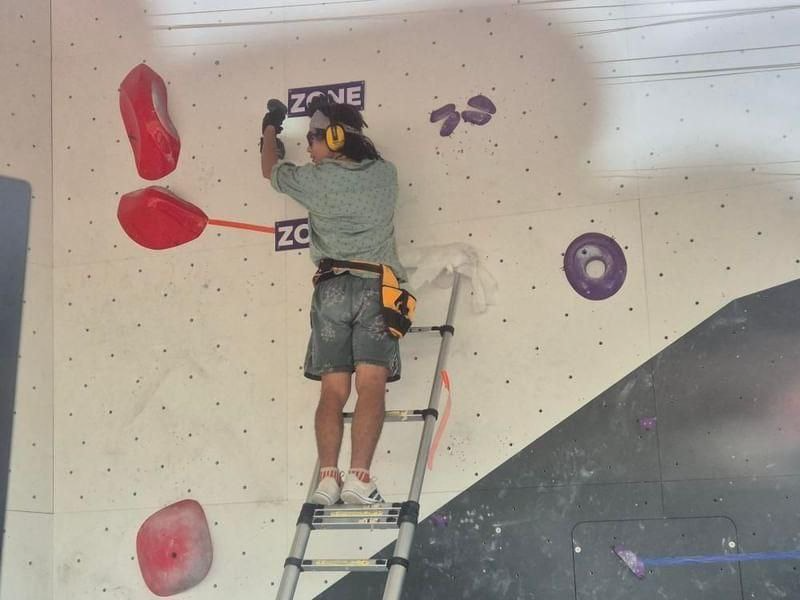
Antagonistic Setting Needs to Stop

Here are examples of antagonistic setting:

  • Placing holds two meters (figuratively) apart to force a "dynamic" move.
  • When matching the last hold is the crux of the entire boulder.
  • Angling the holds in an un-ergonomic way to force a "hard" sequence.

"Antagonistic" setting is not an industry term. I just made it up.


Beauty is the Beast

Challenging moves are necessary to keep climbers interested. But we can also strive for beauty and elegance -- even on burly moves (who says a beast can't be beautiful?).

An antagonistic approach works like this:

How can I make this sequence hard to force someone to do the beta that I want?

A protagonistic approach works like this:

I want to create this cool move I have in my mind. How can I help my climbers do that move?

Instead of using holds as barriers to force a move, why don't we use them as tools that will help climbers move beautifully?

Maybe the difference between antagonistic and protagonistic is just the framing. But the frame does affect the picture we make.

Affordances

Don Norman's book, The Design of Everyday Things, talks about the concept of affordances: these are features that allow someone to do something. 

For example, the backseat of a chair allows us to lean back.

Maybe we need to start thinking of holds as affordances: things that we give to climbers so they can have fun.

Example 1:

I need to screw holds far enough to force a dynamic sequence.

Alternate solution:

Can I force a body position that forces them away from the next hold? So that they will be forced to use power and dynamism to get to the next hold? Can I use body tension to force a dynamic move if they let go of one limb?

Example 2:

I will make the first and last sequences cruxy.

Alternate solution:

These things work in the Olympics because it's hard to separate the field in top-level competition.

But at commercial gym is really just a leisure center. There's not leisure in not being able to get on a problem or falling at the very top.

I remember when I was climbing in Danao, the bolter (Algin) said he could end some of his hard lines somewhere in the middle. But why not give climbers an extra set of juggy sequences for a victory lap?

I like this mindset. Even the Tour de France ends in a champagne "race" around Paris.

Example 3:

I will angle this crimp vertically so that it makes for a dicey foothold.

Alternate solution:

Awkward footholds, gastons, and undercuts do make a move hard. But consider the wrist and ankle positions that you are forcing. Think: an injured customer is a non-paying customer.

Sunday, July 28, 2024

Instead of Teaching Climbing, Why Don't We Teach "Body"?

PS: I've been writing lately because there's no one to speak my mind to.

You've probably been taught this way: This is a heel hook. Here's how you can do it.

I'm not sure if I have an upside-down brain but I prefer to teach a different way:

This is your foot, here's what you can do with it:

  • You can step with it (toe).
  • You can use it to pull your body towards a hold (heel hook).
  • You can use it get above a hold (rock over).
  • ; and
  • You can use it for counter balance (flag).

You can use your hips to:

  • Change direction
  • Put more weight on your feet (twist)
  • Reach further without pulling (again, twist); or
  • Generate power (by moving it away and back).

The material is the same. It's only a shift in language. But I've noticed that people respond better when you hold their hand as you walk towards an unfamiliar concept; instead of presenting an unfamiliar concept and unwrapping it in front of them.

Why Some People Struggle to Use Their Feet

I have some guesses but treat this as if I'm an Ancient Greek philosopher theorizing about the nature of the atom. Here we go:

  • Their ankles are weak. I guess this has something to do with their calf muscles.
  • They are uncoordinated. Yes, some people cannot sync the movement of their hands, body, and feet. They may step down on a hold before their weight is above it; then their feet pop. If you are one of these people, you're lucky you found a sport that will help you fix this disconnect. Believe in yourself!
  • Side note: When you see someone climbing effortlessly, they're actually not. There's always effort involved when you're grabbing tiny things while gravity is trying to pull you away from it. It's just that every bit of their body is working together in harmony so it creates the visual effect of effortlessness.

  • They are scared and can't think. Fear is always real: even if someone is two footholds above a 30-cm crashpad that covers the entire gym floor. I do respect this fear but I haven't found a way yet to discuss this with people who are new to climbing.

I take a lot of joy teaching how to climb because I'm helping people understand how their body moves. I think our bodies are important because it holds everything that defines us: our thoughts, emotions, and longings for the sunset.

Yes, our bodies do hold everything that defines us but it does not define us.

Monday, July 8, 2024

Marston Mats are All Over Iloilo

Quick preface: I do not romanticize war. 

If you want to put into concrete terms the havoc it brings, do this: 
1. Grab a hammer 
2. Hit random things in your room for 40 seconds.

War does way more than that. 

This post in an invitation to look into your built environment and encourage you to ask: That looks odd. Where does it come from? 

And off we go.
Perforated steel plankings (Marston mats) is used to build temporary runways or landing strips. Think of them as steel pavements with evenly sized and evenly spaced steel holes. 

Each plank can be interlinked to create a wider surface. 

Marston mats are all over Iloilo City, particularly in Molo and Mandurriao. You will also see bits and pieces of them all over Oton. It got me wonder: where do these all come from?
I haven't found any photo of airfields in WW2 Iloilo that have Marston mats installation. But I've found that there are a number of airfields that served US forces during the Second World War: 

Mandurriao Airstrip aka Law Airstrip: It later became a civilian airport until Iloilo International Airport opened in Cabatuan.

Sta Barbara Airport: I saw this referenced on PacificWrecks.com as a "single runway surfaced with clay." The clay was likely padded with Marston Mats. However, on Cabatuan.com, I've read that: Sta Barbara Airport is in fact Tiring Landing Field. 

Tiring Landing Field (TLF): An unpaved airfield where the WW2 Japanese forces surrendered. It is now called Iloilo International Airport, part of the Municipality of Cabatuan.

Wednesday, May 29, 2024

How to Name a Sports Climbing Route - NOT a Guide

Some ways to name a route


After a person (not my favorite): 
I won’t comment because I don’t want to offend anyone.

After the characteristics of a climb: In Cebu, there’s a route called Hait (sharp) because of its previously razor-edged jug. Years of mobbing the route have made it skin-friendly.

After the characteristics of a climb and some random humor: In Thailand, there’s a line called “Best Route in Minnesota.” It’s hideous, especially in the rain. But apparently, if it were in Minnesota, it would be the best line out there.

Also, there’s Resteficken in Laos. It’s a great line if there’s nothing else to climb. 

After a distinct move on the route: There’s a boulder in Liloan, Cebu called “One Hit Wonder” because everything else is easy except for a blind, barn-door slap to a sloper.

There’s also another boulder in that area called “Lefter is the Best Medicine.” A climber was trying that route and the FA was giving a running beta. The climber kept feeling for the left-hand hold but couldn’t find it. The FA was yelling “left, more left! lefter!”. 

Circumstances around the bolting or sending of a route: In Iloilo, there’s a line called Engagement. The bolter projected it when he was contemplating his marriage to his long-term partner.

My other favorite is Blackfoot. Apparently, one of the climbers in the bolting team stepped onto a ditch on the day it was sent.
One of the unbolted areas in Ilog. Photo by Eric Paulo.


Routes that I have named

One time I bolted a route with another climber. I suggested the name “What Is Essential is Invisible to the Eyes.” I thought a long name would make a guidebook interesting. But, in retrospect, it might be a mouthful to talk about at the crag.

I did a first ascent on a route that I named “Run Free Chikoy.” Chikoy was a dog at the homestay in Cantabaco. He was poisoned the night before the FA. He performed the roles of a receptionist and a guard-on-duty. If anyone worked to get paid in love and head pats, that was Chikoy.

“Name and Claim”

In sports climbing, the bolter reserves the right to name a route. The most prolific bolter in the Philippines is Kuya Mackie. Almost always, he gifts the naming right to the first ascensionist. Which is why, as a younger climber, I just assumed that the FA gets naming rights.

Giving a route a good name is important to me. I don’t know why. I haven’t reflected on it yet.

I recently FAed a route bolted by Kuya Mackie. I named it Ɖlan because of its high-spirited, energetic sequences.

For context, this is in Ilog, Negros Occidental. I discovered the climbing potential in that area when I was living in Bacolod. A few months after I left, local climbers and Philippine Bolting Fund have put up the first sports climbing crag on Negros Island.

My time in Bacolod has been meaningful. That’s why I wanted to name the route after something that is specific to Bacolod– or at least something that alludes to the place.

Ɖlan didn’t meet that category. So I asked the bolter if I could rename the route, one day after I declared its name. Hence, the name “Yarda.”

Yarda 6c+

Yarda (yard) is the unit of measure used by upholstery and tailoring stores in Bacolod’s central market. In Cebu and other places, they use meters. (I know because I DIY random stuff even if people might think that I do nothing else except climb.)

When I first bought a length of strap at a store in Bacolod, I told the store attendant that I needed two meters. She said they sold in “yarda,” not metros. In my mind, it was tomato-tomato so I said yes I will go for two yards.

Sometimes, I lament my lack of precision but I think there’s also power in good approximations. I managed to scrape a meaningful life months after I’ve foregone the differences between a meter and a yard (although such tolerance doesn’t work in the NFL or Mars Rover missions).

Grades and route names are approximations of the joys that we want to frame in nifty little words (or numbers).

I’m sticking with the name because:

  • It’s easy to pronounce.
  • It represents something that is distinctly Bacolod.**
  • It’s in harmony with the routes next to it: Yuhom and Paglaum. Same language, one word.
  • It has a meaning that is a bit contrived but I’d still like to push: approximation works.

**If you can’t relate to it, maybe you need to spend more time in Bacolod’s Central Market.

Wednesday, April 3, 2024

6A is NOT 6a

Please, let's stop mixing up the Font 6A (assigned to boulders) with the French 6a (assigned to sports routes).

  • If it's a capital letter that follows a number, it's a boulder grade.
  • The hardest move on a 6A boulder is way harder than the hardest move on a 6a line.

In the big picture of things, grades hardly matter. I quote from a post from Climbing.com:

“Numbers got no soul. People need to get over that stuff.”

But we need to understand what grading systems mean. Because, otherwise, we won't be able to read guidebooks properly.

Here's a quick side note: In my home crag, we used to rate climbs with the Yosemite Decimal System (YDS). For example: 5.9, 5.11a, etc.

But as more local climbers traveled and worked abroad, they came back describing routes in the French system.

I prefer the French system for sports routes and the Vermin system for boulders. I can't explain why.

Tuesday, March 19, 2024

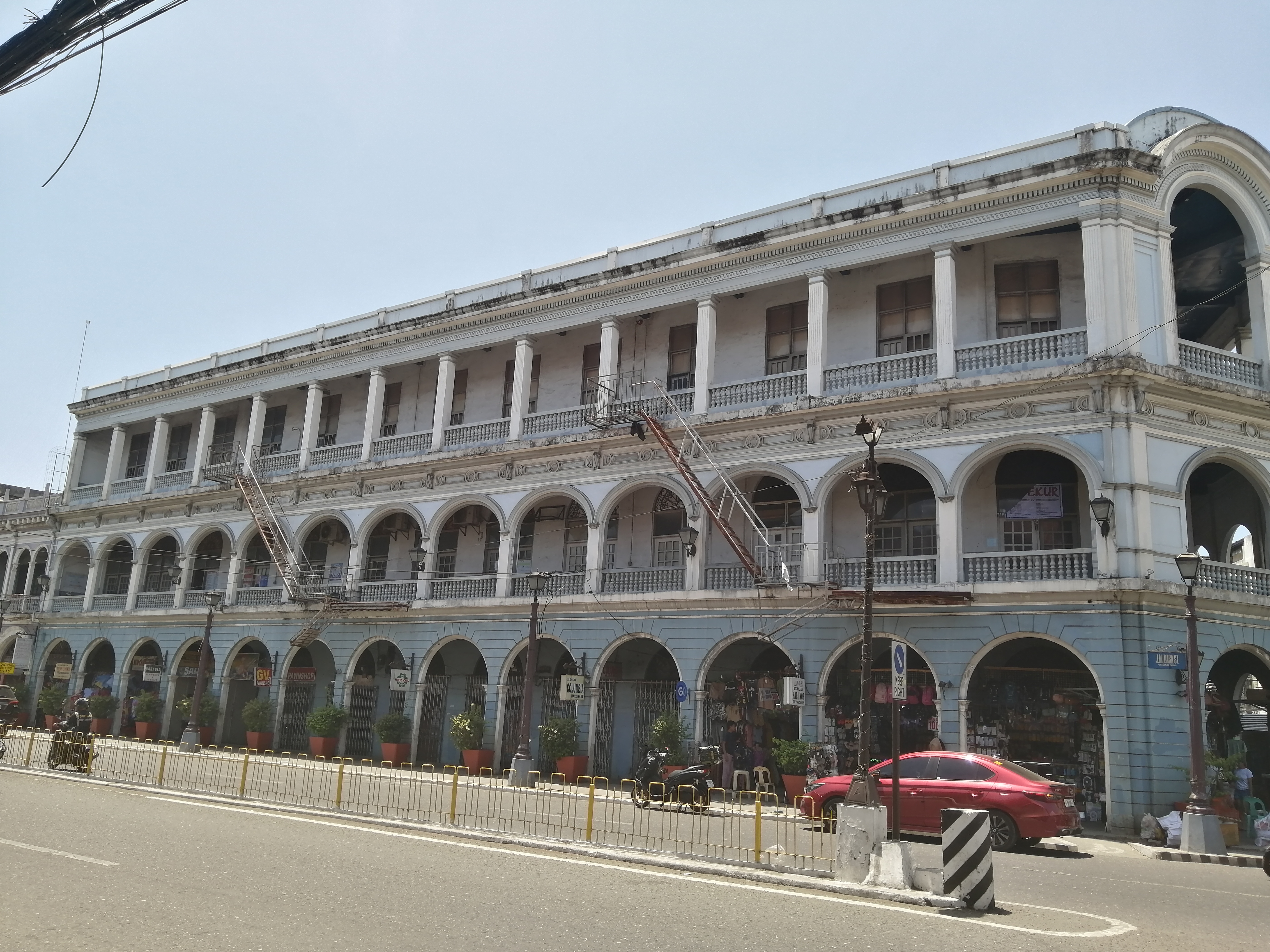
Five-Foot Walkways in Iloilo

Five-foot ways were used by everyone for everything: by the nosy for gossip, by children for their games, by hawkers to sell their wares and by vagrants for shelter.

- Selina Siak Chin Yoke
The Woman Who Breathed Two Worlds

The quote is from a book about a Nyonya who grew up in Penang, Malaysia. She describes a building feature which also happens to be a common fixture in downtown Iloilo City.

Five-foot walkways represent a time when streets and walkways were public gathering spaces. It was built at a time when commerce and daily life were interwoven: people lived above their shops; you didn't have to go out of your way to buy anything because everything you need is along the way.

The five-foot way was a path, protected from the elements, that is shared by private enterprises and the public.

This is a quote from a 1993 article called "The Shophouse Rafflesia: An Outline of its Malaysian Pedigree and its Subsequent Diffusion in Asia" by Jon S.H. Lim:

The term 'five-footways' is a colloquial expression from Anglo-Asian origin, made up from two parts: 'five-foot' is a literal translation from kakilima or goh kaki, a Malay and Hokkien term respectively, and 'way' which is a corruption of the term 'footway.'

It is most likely that the term 'five-footways' was coined by local builders in response to observing the minimum width of a verandah for shophouses.

In colonial S.E. Asia, there existed two codes which shaped the built environment; namely the Royal Ordinances for Manila and the 'New World' as proclaimed by Philip II of Spain (1573), and the Raffles' Ordinances (1822) for Singapore and the 'Malay world'.

The Town Building Committee which he formed stipulated: 'All houses constructed of brick or tiles have a uniform type of front, each having a verandah of a certain depth, open to all sides as a continuous and open passage on each side of the street.

I definitely prefer bumping shoulders on five-foot walkways to being lost in the labyrinths of a mall. Because the old buildings of Iloilo are not just relics -- they are still living, thriving, and growing parts of our lives.

The last building has nothing to do with this post. I just think it's super cool.

Friday, March 8, 2024

How to Give Verbal Encouragement as a Belayer

In the face of ambiguity, refuse the temptation to guess

-The Zen of Python

This is something that took me a while to learn, partly because no one taught it to me. Partly because I'm a slow learner:

How to give the right amount of verbal encouragement to a climber. To find out, just ask.

Some prefer being constantly reminded that someone is holding the rope for them. You can barrage them with "allez" and "gamba" and "venga vicho" like you're giving them an unrestrained IV drip rate.

Others may get distracted by the slew of words, like they're trying to read Dostoevsky and you're the neighbor hammering the drywall to put up a frame of gambling dogs.

Most people will say they don't care either way. Just ask anyway.

People appreciate when you ask.

One of my most memorable belay moments was when a climber sent her project in the dihedral wall in Danao. All the climbers were in another area. Between the partner check and the send, we didn't exchange a single word.

It reminded me of being in high school. During morning breaks, I'd go to the library when no one else would go. The only sound was of hardbounds being lifted on and off the shelves. The sound of quickdraws and leaves swaying—and the silence.

Belayers have no place in history.

But we still do our best so our climbers don't end up in the obituary.

Wednesday, August 30, 2023

Let's Lie About Our Sends

Honesty is always assumed. Whenever someone says they have sent their project, the first reaction is always a hearty congratulation. Nobody would even bother to ask for proof.

Recent instances in our gym made me wonder if this tradition will continue. A relatively new climber has more than once claimed a send, although in one instance he stepped on an off-route foothold; and in another he pushed off of the mat in the third move of a boulder problem.

I wonder if this is an isolated instance or if this is someting we'll see more of as climbing grows in the Philippines.

I like the concept of trust. In the homestay where we go to climb, the beers are left in the open for grabs. On checking out, we just tell the owner how many beers we drank and she never bothers to verify.

Maybe we can keep something like that going.

Sunday, August 6, 2023

Ilog, Negros Occidental | Sports Climbing Potential

Ilog is less than three hours by bus from Bacolod City.

The crag is about 5km from the highway. The terrain to the crag is unpaved but flat. Nothing technical.

The approach to the crag is between a hut and a small field of sugar cane. It's easy to ask for directions because there are houses in the area.

There are potential for routes from 5a to high sevens. There's also a possible multi-pitch.

Some of the lines are around 12 meters long while there's a long stretch of white rock about 18 meters high (possibly taller).

The belay area of the headwall is clear but the path going there is overgrown. It's better to bring one of those snippy-snappy gardening tools.

The path is also covered with fallen trees. Please be aware that the trunks can crumble under human weight.

There's a west-facing crag that I didn't have a change to explore. These photos are from the part of the crag that faces north.

Tuesday, August 1, 2023

There's No Layer Like a Belayer

When I'm up on a climb wondering if I could trust my foothold, I don't want to have to wonder if I could trust my belayer.

Emotional safety is rarely talked about in climbing. It's time we discuss what we can do to make climbing more emotionally fun.

Preface: Belaying is an activity in itself. It's not that thing you do because others did it for you.

Preface again: If these statements were universal truths, they'd be carved in stone. It's all opinion but maybe you should consider them.

  • Don't distract belayers. Whatever you want to ask them, it can wait. A line usually takes less than 20 minutes to climb. We have a weekend to spare. Your chat can wait.
  • Please avoid talking when belaying. It can wait.
  • Please take falls. A chatty belayer might be a bored belayer. It's not fun to belay someone who won't commit to a gnarly move.
  • Check in on your belayer. Say thank you after a catch or check if they are still okay to belay.
  • Normalize switching belays. 40 minutes of standing and pulling rope is not fun.
  • Gift a Beer on Your Send. Belaying might be a labor of love but it's still labor. We all know that beer is a working person's favorite drink.

Tuesday, June 20, 2023

Thinking Inside the Box: The Belay Box

"Belay box" is not a real term. It's an imaginary demarkation in which I allow myself to step back, forward, or sideways. I should call it "belay sphere" but it sounds too New Age or esotheric. So we'll call it a "belay box."

A Kleimheist is an important friend you rarely get to see. Photo by Darren.

Establish your belay box

These are my general categories when establishing my belay box:

  • a step or two away from the rock
  • aligned to the bolt
  • clear view of the climber
  • out of line of debris or a climber's fall trajectory

I also pay attention to any edge that I could step out of or any rock (or roots or lego) that I can trip on.

When belaying on steep slopes or ledges, I use a personal anchor system to keep me inside the box.

Shepherding as a belayer

"Shepherding" is a term that I've made up just now. It can refer to other people in the crag or the rope.

Shepherding the rope means I move the rope out of a climber's way. I make sure that it's easy for them to step over a rope if needed or that the rope is out of the way of a hold (usually a foothold).

Shepherding other people in a crag just means that I don't let people pass in front of me when I belay. It seems that many people are unaware of their space or the dangers of passing someone who is lead belaying.

I usually shepherd people by stepping closer to the rock to make it less desirable to pass in front of me.

I don't feel comfortable either when someone stands too close to me when I belay. When someone encroaches in my belay box, I lead with my back towards them -- pretending that I didn't see them as a move backward.

People are always kind enough to make space.

Thank you for reading.

Friday, May 26, 2023

I've Plateaued and That's Okay

I haven't improved in many areas in the last few years -- apart from learning how to play chess and becoming really good at selecting squares with traffic lights.

Pyscho Carabao, 8a

It'sonly predictable that I haven't bumped up my climbing grade. I have been lamenting that my wish for an 8b hasn't been answered.

Billy, a climber from Manila/Someplaceelse, noted that there's not really that many 8bs in the Philippines to begin with. His answer is so sensible that it didn't occur to me to think about it.

The Engagement, an 8b that I had the luck to try a few times.

In Cebu, where there are about 150 sports lines, I can only think of less than five 8bs (my estimate does not include the North Wall since I have very limited knowledge of the place and development continues to happen there.)

So I thought I'd give theCrag a quick check to see which crags in the Philippines have 8bs. I understand that theCrag may not have an exhaustive list of all the lines in this country. But I think it works for data sampling.

Crags and Number of 8bs

Kiokong: 0

Panay: 1

Luzon: 0

Cebu: 5

This list is incomplete and likely to be inaccurate. But's a good enough sample size to affirm my belief: I wish I had more money to do climbing trips.

Thank you for reading.

Tuesday, April 25, 2023

Potential Rock Climbing Area in Western Negros

Camingawan, Kabankalan, Negros Occidental.

Recently, I went out to explore a potential climbing area. I've uploaded these images and the spot where the cliff is located for equippers who might come along in the future. Locals call the place "Puting Bato". 

The top part of the crag, which you can access by going around up a hill road, is called "Banga Peak."

Sunday, April 23, 2023

Reflecting on my first 8a

When I first projected that line, I haven't sent a 7a yet. The only piece of "climbing gear" that I owned was a pair of pre-owned shoes. 

I follow whichever line other people's rope dangled from. 

I wish I was able to ease my way up to harder things.

A repeat I did many years after:

It was a rainy day. I just cycled 52 kms with a 400-meter elevation. (I had to go the longer way because the shorter route was blocked by a landslide). A tiny piece of metal poked a pin hole on my tire on my way to the crag. 


My climbing partner arrived late. That afforded me time to rest and get over the frustration of a delayed trip. There were only three of us at the crag that day. 

Before I hopped on the climb, I told the other person that I might be screaming as I go up. That I didn't mean to sound violent -- I'm just letting out energy into the universe. The crux was at the first four clips. 

 The deciding move was towards the end of the crux section. I executed the move poorly. But I wanted the send bad enough that will power made up for my lack of skills. I stuck the crux. But there was still 20-something meters of 6c+ climbing that I've never done before. I've never worked the upper part of the climb. 

I didn't think I'd be able to get past the crux. On that moment as I was in a resting stance after the crux, I extrapolated: if I just did an 8a crux, then I can surely on-sight my way to the anchor. 

 It was naivete that I perceived as self-confidence. On a day when sunlight barely filtered its way through the clouds, when tiny drops of rain muted most of what was happening below the crag, I clipped the anchor. 

My belayer, who was my first climbing mentor, wrote on the log book that day that I sent White Flower 8a. 

The only reason I was able to send a 7a one week before my 8a repoint was that there were draws on a nearby 7a. 

Today I wrote this reflection because I thought how much better of a climber I could have been on that redpoint day if I had a chance to pyramid my way through the grading ladder: bunch of 6s and 7s so the 8a-jump won't be such a big leap. 

I'm still grateful for my mentor, Bhagdok, who invited me to project with him. 

I don't know if he believed that I've got it or if he just didn't have anyone to climb with. But it's all the same. 

A beer and a warm meal, shared by a three-person crowd in a cold rainy night, was more than I could have asked for after the send.

The only photo I've had of that day, Master on belay:


Thursday, April 20, 2023

TRE Sirius: Obscure by Design

The TRE Sirius didn't have the camming power of the Grigri or the simplicity of the Jul. That's why it died along with the dinosaurs when the big flaming rock hit the earth. (It's not that old, but I can't find any info on its date of release.)

The only thing that goes well for the TRE Sirius is its feeding. The rope goes through the tube like its coated in butter. But it couldn't clamp on the rope enough so that I can ease on my brake hand as my climber hangs on the rope.

This is the setup for the TRE Sirius:


To load the rope, pull back on the spring-loaded camp and flip the latch open.


When the climber end is loaded, this camming mechanism is pushed so that it clamps on the brake end of the rope. Even on a 9.8mm rope, the camming force wasn't enough to alone my brake hand to go into vacation mode.


I can only guess why the TRE Sirius ended up in obscurity. But I still wish it gave that extra pound of braking power -- if only for the notoriety of me belaying with a lesser known belay device.

Tuesday, September 6, 2022

Hidden Wall: Rock Climbing in Cebu, Philippines

There's a newly bolted line in Barangay Poog, Cebu Province called "The Hidden Wall." The cliff was bolted by Escanio, a low-key and highly perceptive climber who splits his time between the Philippines and Italy.

To get there, face the main wall of Poog. Stick your right arm to the side and follow that direction for one hundred meters. You will see this formation below:

The hidden wall can be seen just behind a smaller crag.
The hidden crag is a two-minute walk away from the main wall, tucked behind another rock.


(All photos are from Adrian a.k.a. Dokito)

Ancient Ruins

Local climbers also call the new area "Ancient Ruins":

On account of blocks of rocks that have evenly spaced semi-funnels on the side -- which looks like it's part of an occult alien temple from the years before human words were invented.

Four bolted lines

As of now, there are four bolted routes (from left to right). All the grades are unconfirmed because we need more opinion to arrive closer to reality.

Alessandro, 8a

The bolter initially proposed 8a but when I hopped on it, I got shutdown immediately. The bolter wrote me that there's a:

"big crux and no easy exit, one of the best lines I bolted."

I learned that this meant that the crux starts right at the gate and continues for six draws (with a few moves to breathe between the third and fourth bolts).

It's also true that it's not easy to get out of the crux. I left my bailer exactly where the crux ends.

For context, I tried this line with one of the strongest climbers in Cebu (@crimpgod.jj). We both agreed that there's a possibilty it's harder than an 8a. Unless we're missing some holds.

Bugo Sisters, 7b

The aesthetics alone is enough to invite you to get on this rock. Tufas flow from top to bottom like rivers with joining and disjoining deltas.

Tufas flow down the cliffs, offering an exciting style of climbing.
This is an unbolted section of the Hidden Wall.

Pinches and sidepulls offer wild plot twists that make this climb beautiful for climbers of any reach or wingspan.

We haven't had a chance to climb this route but I saw the potential. It was right next to Alessandro where I was close enough to tell it's a beautiful line.

Queen Bee, 7a+

The bolter named this after the bees that were nesting on the line (they weren't there anymore when we climbed).

The climber (Naoki) who first attempted this said that: the holds were thin as potato chips that tend to break.

Adrian hopped on it to confirm. However, when he was about to retrieve that draws, he realized rappel rings didn't exist at the top of this climb.

So he was forced to go back to the ground and climb it the second time to put a carabiner at the anchors.

He sealed the first ascent on that second try.

Victoria, 6a+

In terms of variation, I love this line the most. It starts on a juggy slab whose features were aggressively defined by thousands of years of rain. Then the line mellows down into a delicate slab climb that offers good feet and hidden hand holds.

As you climb, you might need to meander left and right to find the path of least resistance. But I imagine a direct line between the bolts is impossible -- although it makes the climb unnecessarily hard.

John did the first ascent of this line. It's his first ever FA and we're wishing him more first ascents.

Massive boulder that we came across while searching for the hidden crag in Poog, Cebu.
We came across this boulder while searching for the Hidden Wall.
Bal Marsius